
Storage, blending and transshipment
Terminal Storage
The terminal location is authorised as a customs warehouse, comprising of the complete infrastructure of tanks, pipelines, jetties and refinery. To optimize storage capacity and avoid disproportionate costs, accounting segregation is applied and non-Union and Union goods are commonly stored.
VTTI’s ERP system facilitates an inventory module where an audit trail is provided regarding all goods at the terminal for their entire lifecycle, clearly identifying the type of goods, the customs status and, where appropriate, the origin. The following process applies to any movement of goods at the terminal with regard to applying the correct customs procedures and rules around customs status.
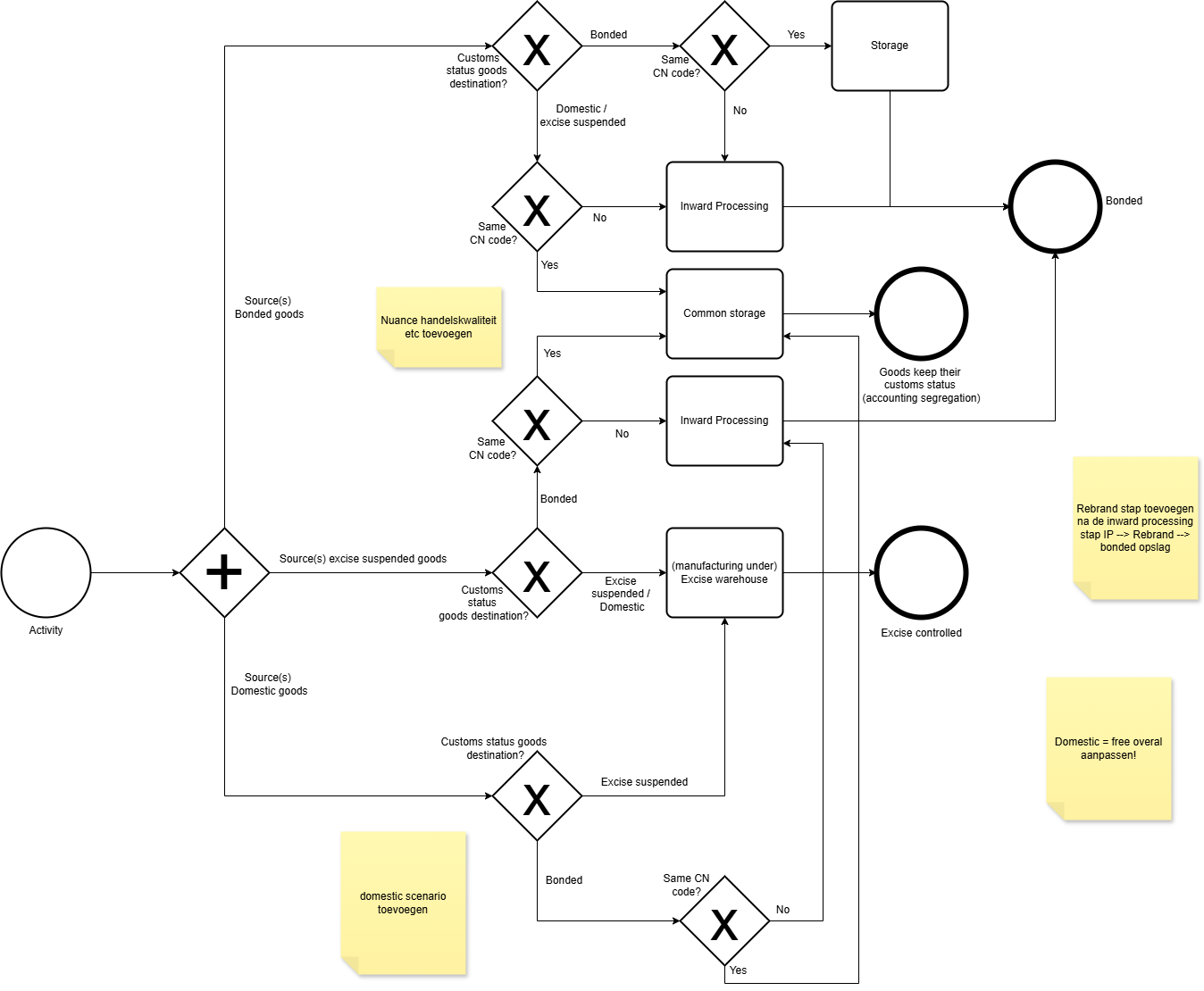
A link to the "C&E - Storage of goods" procedure is included here.
At the terminal, various manipulations take place. All manipulations are recorded in VTTI’s ERP by means of activities to ensure a complete audit trail.
A link to the “C&E – Orders related to manipulations during storage” procedure is included here.
Movements of goods in VTTI’s terminal, tank to tank transfers, may also require customs declarations, depending on whether or not the movement results in a blend.
A link to “C&E – Tank to tank transfer” is included here.
Cross Border Customs Warehouse including Equivalent goods
Due to economic needs and with a view on sustainability, VTTI Terminals II B.V. has implemented a cross-border Customs Warehouse authorisation between the Netherlands and Cyprus. The longer-term goal is to also implement centralized clearance, which will deliver significant cost and time savings.
A link to VTTI's “Equivalent goods” procedure is included here.
Related work instructions to terminal activities are available in VTTI’s quality management system QOL.
No Comments