Methodology selection
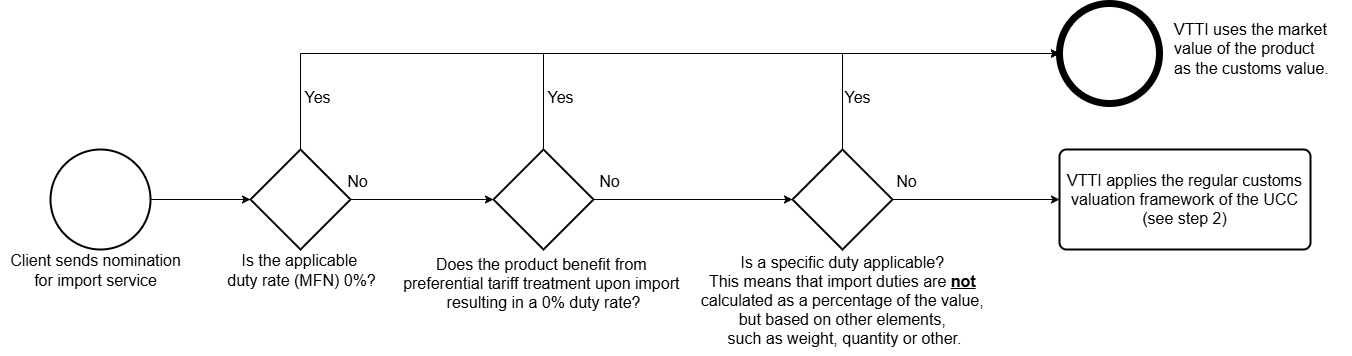
Step 1: Assess if pragmatic approach may be applied
Step 2: Assess applicability of transaction value method
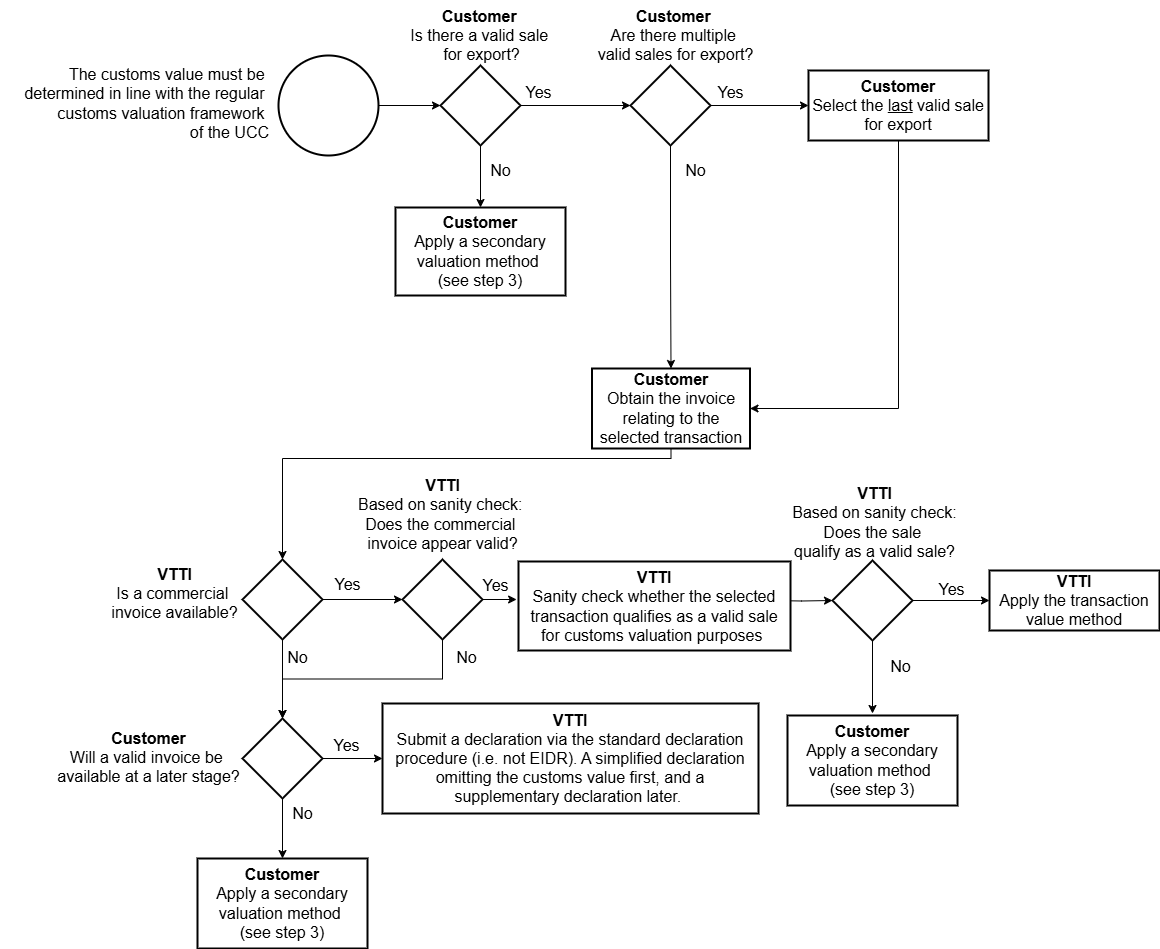
The commercial invoice which relatesrelating to the declared transaction
valueidentified in Step 2.1 is required as a supporting document.document for the declared
transaction value. It is the customer’s responsibility of the customer to provide CS with a
valid commercial invoice.
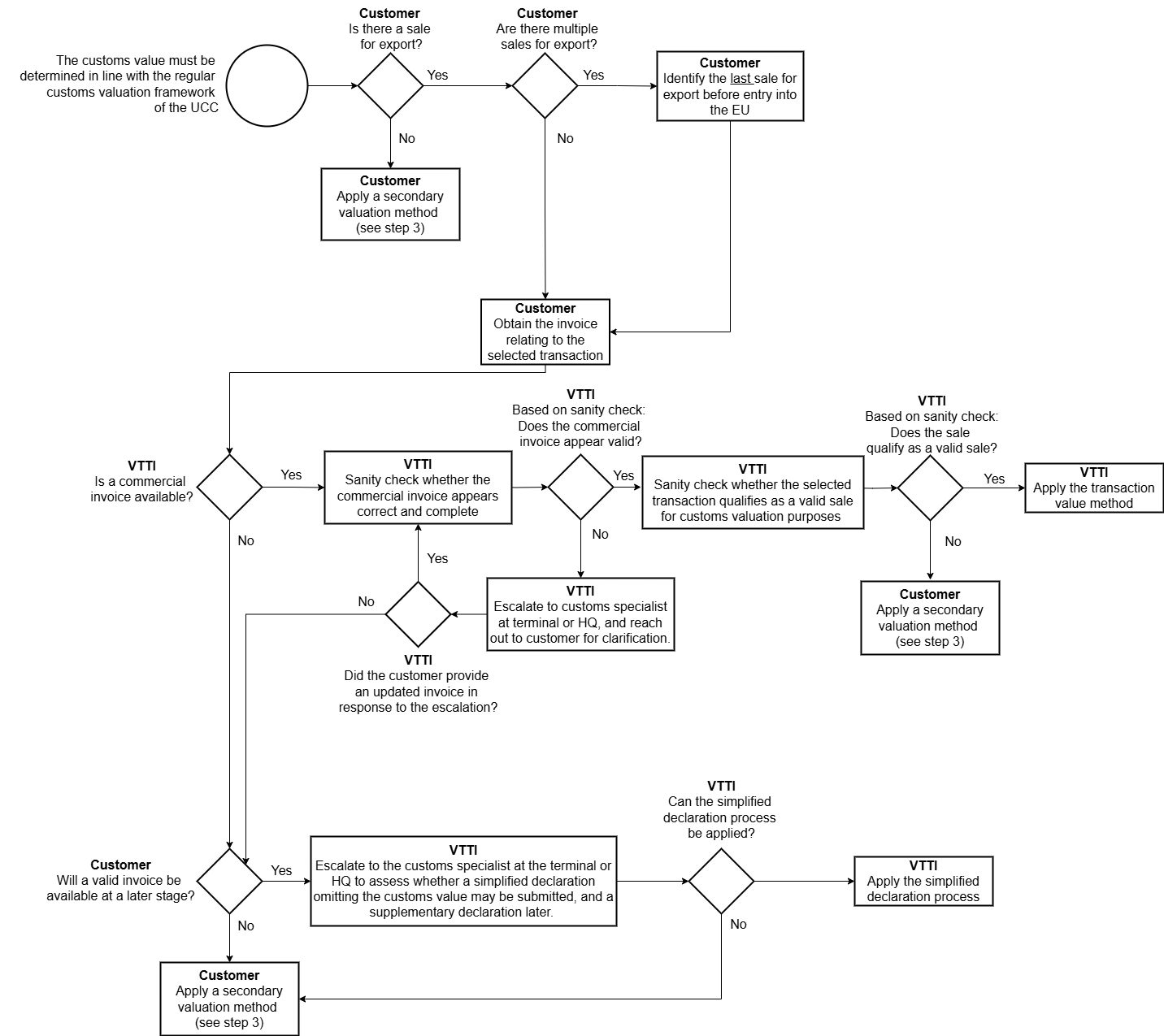
CS performswill perform a sanityreasonableness check onto assess whether the
invoice appears valid and suitable for customs valuation purposes. This review
concerns the apparent validity and completeness of the invoice.
If deficiencies are identified in the invoice, CS will contact the customer to obtain clarification and/or additional supporting documentation.
In exceptional cases,cases where a final commercial invoice is not
yet available, alternative supporting documentsdocuments, (such as a pro forma invoice, a
“for customs purposes only” invoice,invoice or otheranother preliminary invoice)commercial document,
may be accepted,used, provided that they accurately reflect the transaction value and
that this value can be substantiated by the underlying commercial
documentation. Before relying on such alternative documentation, CS will
consult the customs specialistsspecialist at the terminal or VTTI HQ before using such alternative supporting document for customs valuation.
Where the sanitycustomer checkis unable to provide the required
commercial invoice at the time of importation but confirms that the invoice
appearswill valid,become available at a later stage, CS may, subject to the applicable
conditions, submit a simplified customs declaration in accordance with Article
166 UCC. The simplified declaration will contain a provisional customs value
based on the information available at the time of importation. Once the
commercial invoice becomes available, CS will proceeddetermine the final customs value
in accordance with the transaction value method and submit that value by means
of a supplementary declaration pursuant to stepArticle 2.3167 asUCC. describedBefore below.using Otherwise,this
simplified declaration procedure, CS will reachconsult outthe tocustoms specialist at the
terminal or VTTI HQ.
If a valid commercial invoice is available and the reasonableness check does not identify any unresolved deficiencies, it must also be verified whether the other conditions for application of the transaction value method are met. See Step 2.3.
If no valid commercial invoice is available and the customer
is unable to discussprovide findings.one
In aaddition successfulto conclusion ofverifying the sanityavailability checkand inapparent
stepvalidity 2.2, CS will accept the invoice.
This assessment is intended to theverify transaction, andwhether the customerconditions
canset alsoout notin provideArticle that70(3) invoiceUCC atare amet.
In later stage,short, the transaction value method cannot be applied
and a secondary valuation method must be selected (see step 3). This scenario is extremely rare.
Restrictions on use or resale -Ifthe buyer isrestrictedsubjectintohowrestrictionsthey can use or resellregarding thegoods, except for standard restrictions (e.g. legal requirements, geographical resale limits, or restrictions that do not affect the value of the goods).Price depends on unclear conditions -If the agreed price is influenced by conditions or arrangements for which no clear value can be determined (for example: unknown future compensations, or non-quantifiable obligations).Proceeds flow back to the seller -If the seller receives (directly or indirectly) part of the proceeds from the buyer’s resaledisposal or use of the goods,andotherthisthan restrictions permitted under Article 70(3)(a) UCC;- the sale or price is subject to conditions or considerations for which a value cannot be
properlydeterminedadjustedwithinrespect to thecustomsgoodsvalue.being valued; Relationshipanyinfluencespart of thepriceproceeds-ofIfa subsequent resale, disposal or use of the goods accrues directly or indirectly to the seller, unless an appropriate adjustment can be made in accordance with Article 71 UCC; or- the buyer and seller are related and
there are indications that thisthe relationship hasaffectedinfluenced theagreedprice.
Given VTTI’s role, VTTI inherently has limited insightvisibility inof
the supply-supply chain, the underlying chain of transactions and the contractual
circumstances surrounding the sale,sale. itThe customer is therefore responsible for
assessing whether the responsibilitytransaction satisfies the conditions for application of
the customertransaction tovalue assessmethod. whether the sale is valid for customs valuation purposes. CS performs a sanityreasonableness check based solely
on the information available.and documentation provided by the customer. The
reasonableness checks performed by CS are incorporated into the customs
valuation checklist available in BzCtrl. The checklist covers both the apparent
validity of the commercial invoice and supporting documentation under Step 2.2
and the conditions for application of the transaction value method under this
Step 2.3.
If the sanityreasonableness check raises anydoubts doubtas regardingto whether the
acceptabilitytransaction ofsatisfies the invoiceconditions price,set out in Article 70(3) UCC, CS will
contact the customer toand obtainrequest further clarification and supporting
documentation before lodging the customs declaration.
If no unresolved concerns are identified, CS may use the transaction as the basis for applying the transaction value method.
If it is concluded that the conditions set out in Article 70(3) UCC are not satisfied, the transaction value method cannot be applied. CS will inform the customer and escalate the matter to the customs specialist at the terminal or VTTI HQ. The customer must determine and substantiate the customs value in accordance with an appropriate alternative valuation method as described in Step 3 and provide CS with all information and supporting documentation required to prepare the customs declaration. VTTI may discuss the proposed valuation approach with the customer and perform a reasonableness check but responsibility remains with the customer. CS will not lodge the customs declaration until a sufficiently substantiated customs value has been provided and any material concerns have been resolved.

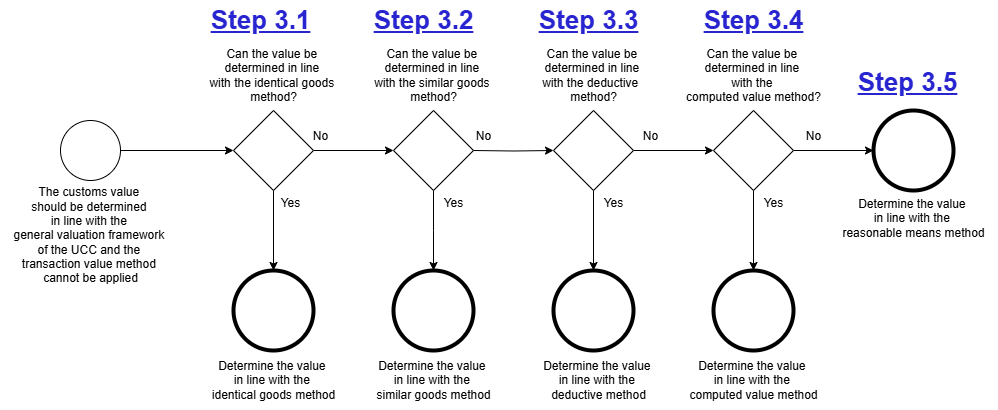
Step 3: Assess applicability of secondary valuation methods
- The cost or value of materials, fabrication and other processing employed in producing the imported goods,
- An amount for profit and general expenses equal to that usually reflected in sales of goods of the same class or kind as the goods being valued which are made by producers in the country of export for export to the Union and
- The cost of transport and insurance and loading and handling charges associated with the transport of the imported product, up to the place where the product is brought into the customs territory of the EU.
In conclusion, where the customs value must be determined in accordance with the standard valuation framework of the UCC and the transaction value method cannot be applied, CS will, together with the customer, explore at a high level whether the identical goods, similar goods, deductive or computed value method may be applied. However, based on experience, and given the nature of the liquid bulk industry as well as VTTI’s role in the supply chain, it is in practice rarely possible to apply any of these methods. Consequently, the fallback (“reasonable means”) method will generally be applied.
Where it is determined, following alignment with the customer, that one of the alternative methods can be applied, CS will agree with the customer how that method is to be applied in practice. This will be documented by CS in a client-specific work instruction.