
Customs procedures
The customs and excise procedures applied at the terminals are aligned with the operational lifecycle of the goods involved. The operational processes are described in detail in the Operations paragraph of this AO/IC. This chapter describes the customs and excise procedures that govern the movement, storage, processing and dispatch of the goods.
Throughout the terminal process, goods may be subject to customs supervision, excise duty suspension, or be in free circulation, depending on their customs and excise status. The initial applicable procedure is determined at the point of first arrival at the terminal and may subsequently change during the lifecycle of the goods as a result of storage, blending, manufacturing, transshipment, importation or dispatch activities.
During the goods receipt process, VTTI records the arrival of the goods and performs the customs and excise actions associated with the preceding movement procedure. This may include the discharge or discharge or closure of transit or e-AD’s and the registration of the product within the terminal administration.
Following receipt, the goods are assigned the customs and excise treatment applicable to their status and intended storage and handling. Non-Union goods are generally placed under the Customs Warehousing procedure, Union goods subject to excise duty suspension are entered into the Excise Warehouse, and other Union goods are recorded in the Free Warehouse. Non-Union goods may instead, or at a later stage, be released for free circulation. Following their release, the goods are entered into the Excise Warehouse or recorded in the Free Warehouse, depending on whether they are subject to excise duty suspension.
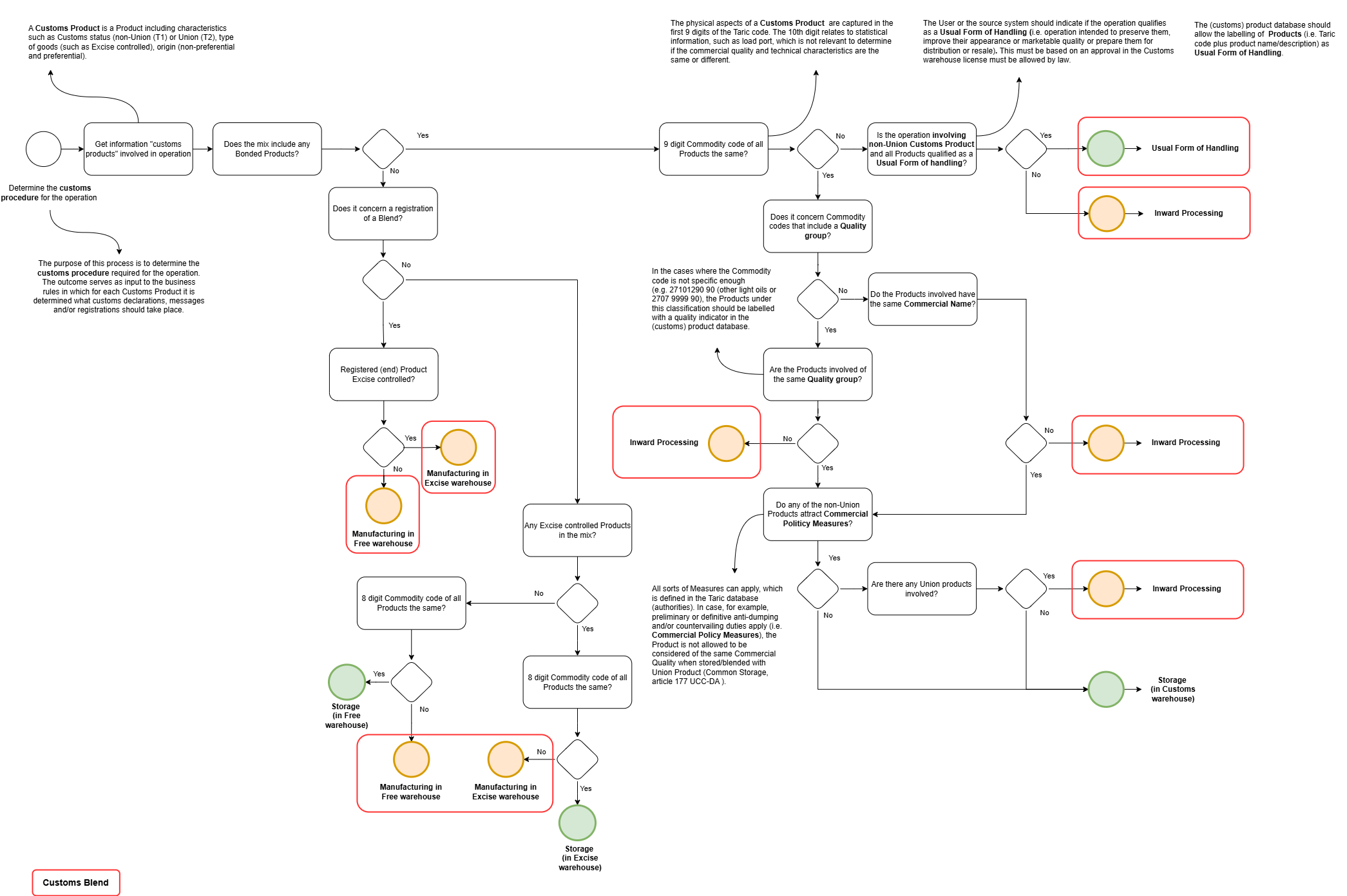
Where goods are blended, manufactured or otherwise processed, the applicable customs and excise treatment is determined based on the customs and excise status and technical characteristics of the goods involved, as well as the nature of the operation. Depending on the outcome of this assessment, the operation may be treated as storage, manufacturing in the Excise Warehouse or Free Warehouse, Usual Forms of Handling under the Customs Warehousing procedure, or Inward Processing.
Upon dispatch from the terminal, goods may leave under excise duty suspension covered by an e-AD, under the Union transit procedure covered by a T1 document, under an export or re-export procedure, or as Union goods in free circulation where applicable. The required customs declarations, excise messages and supporting records are generated and maintained in accordance with the applicable legal requirements and authorisations.
The detailed functional and technical design of the ERP System and Customs Module, including the Parcel administration model, procedure determination logic, business rules and declaration processes, is described in Annex AO/IC ATLAS-CMS.
Figure X below provides a high-level overview of the customs and excise procedures that may apply throughout the lifecycle of goods handled at a VTTI terminal.
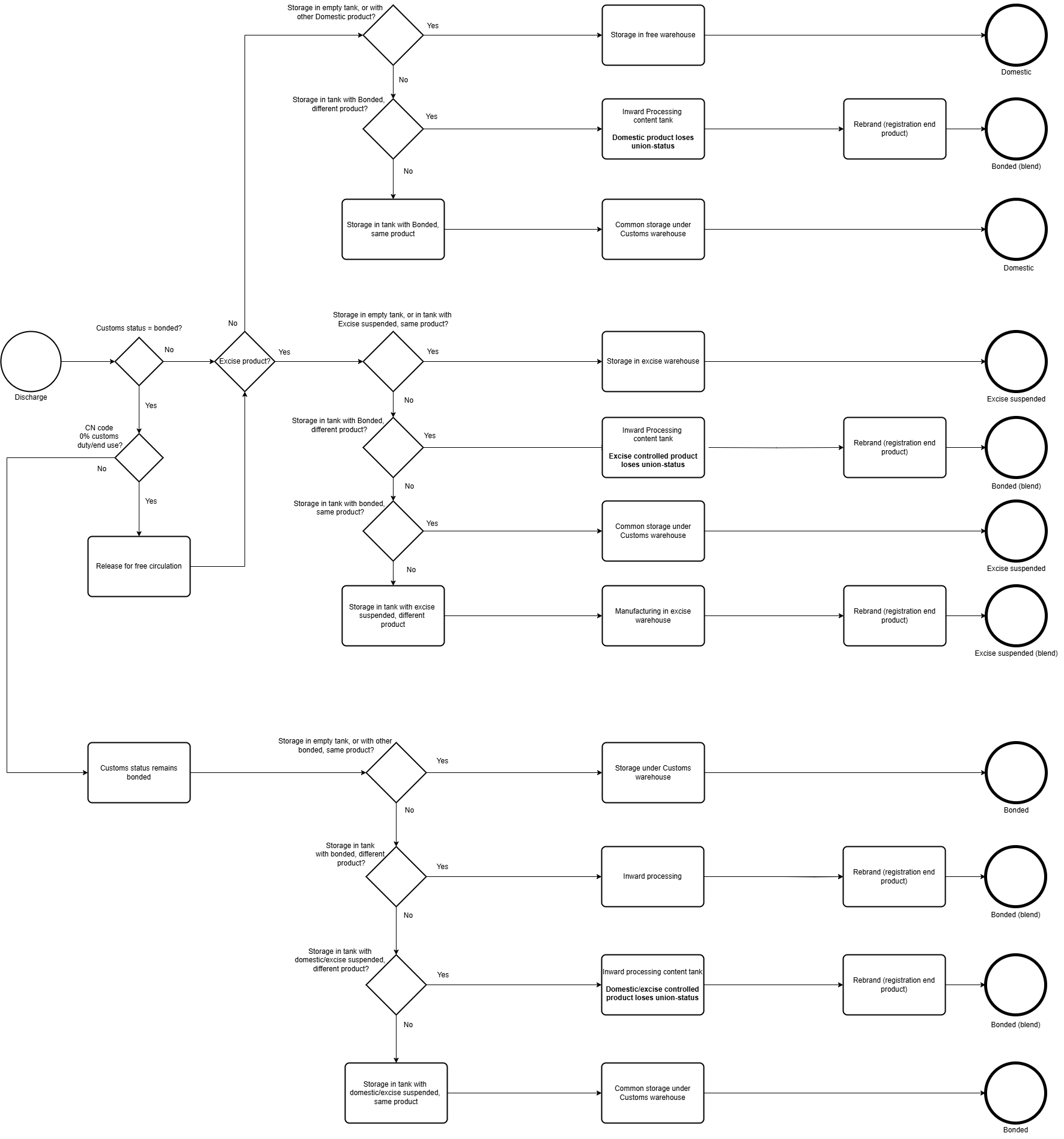
The procedure that is followed by CS and OPS at the time of discharge/unloading is included here.